

Understanding Rechargeable Lithium-Ion Batteries and Their Everyday Applications
A surprisingly small cylinder can do quite a lot of work. Take the battery tucked inside a powerful torch or a portable power pack. It may look ordinary, yet the technology behind it is anything but basic. The 18650 is a rechargeable lithium-ion cell, named for its approximate dimensions, 18 millimeters across and 65 millimeters long. That familiar shape helps explain why it turns up in so many products, although protected versions may be slightly longer. Unlike a disposable battery that gets replaced when empty, this type can be recharged repeatedly. For anyone curious about modern portable power, it’s an interesting place to start.
Inside the metal casing, carefully arranged materials allow lithium ions to move between electrodes as the cell charges and discharges. That movement makes it possible to store a useful amount of energy in a relatively compact package. Most conventional lithium-ion cells in this format have a nominal voltage around 3.6 or 3.7 volts, rather than the 1.5 volts associated with a typical alkaline AA battery. So, despite a passing resemblance, the two are not interchangeable. Chemical formulation matters too. Different versions are designed to balance energy capacity, current output, operating life, and thermal characteristics, depending on what the equipment needs.
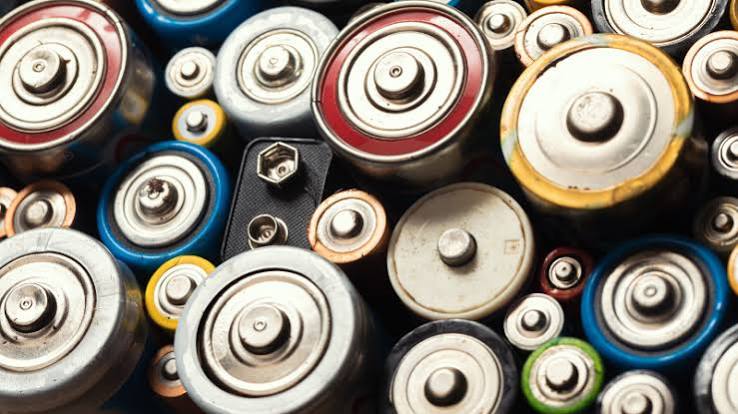
You might spot these cylindrical cells in high-performance flashlights, certain laptop battery packs, portable instruments, and equipment built for demanding work. Sometimes a single cell does the job. Elsewhere, manufacturers connect several cells in a carefully engineered pack, complete with electronics that monitor operating conditions. A longer runtime sounds appealing, but capacity is only part of the story. A device drawing substantial current may require a cell designed to deliver it safely, even when that means choosing a lower stated capacity. This is why buying purely on the largest number printed on a wrapper can lead to disappointment. It’s an easy mistake when products look almost identical on a shelf.
Shopping also brings up another distinction, protected and unprotected cells. Some individual batteries include added circuitry intended to guard against conditions such as overcharging, overdischarging, or excessive current. Others are designed to operate within equipment that provides those safeguards elsewhere. Neither option should be treated as universally suitable. Length and terminal style can differ, which means two seemingly similar cells may not fit the same compartment. Charging deserves just as much care. Use a charger approved for the battery type, keep cells away from loose metal objects, and never use one that is dented, swollen, leaking, or unusually hot.
The smartest purchase starts with the device’s instructions, not a bargain sticker. Check the specified chemistry, voltage, dimensions, current requirements, and whether the equipment needs a protected cell or a particular terminal design. Buying an 18650 from a reputable specialist also makes it easier to avoid suspiciously exaggerated capacity claims and products of uncertain origin. Proper storage, sensible charging habits, and following the manufacturer’s guidance can all help preserve performance. There’s no need to become a battery engineer to make a good choice. A little knowledge, paired with a trustworthy supplier, goes a surprisingly long way.